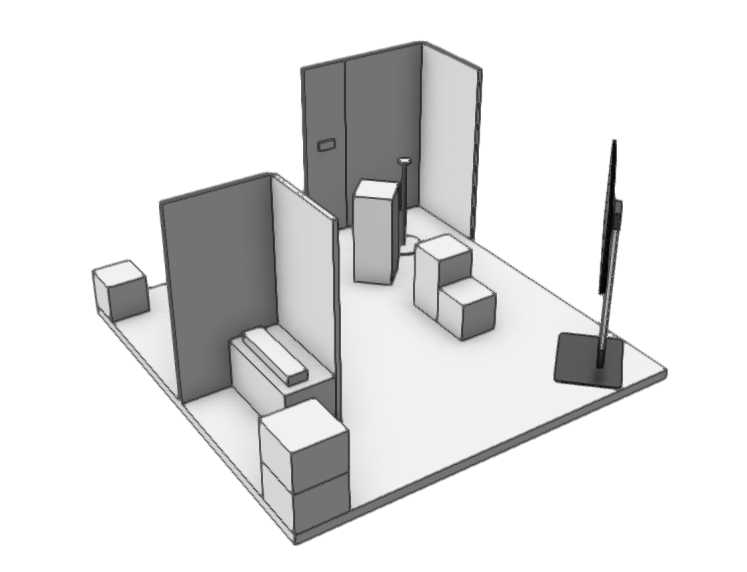
- Hier sind die Plan-Dateien (Sie müssen keinen Dropbox-Account haben).
- Hier ist der Link zu dem einen Live-Escape-Paper von 2015. Auf den Seiten 17/18 gibt’s Patterns.
- Template für API für Gruppen
¶ Raumgestaltung
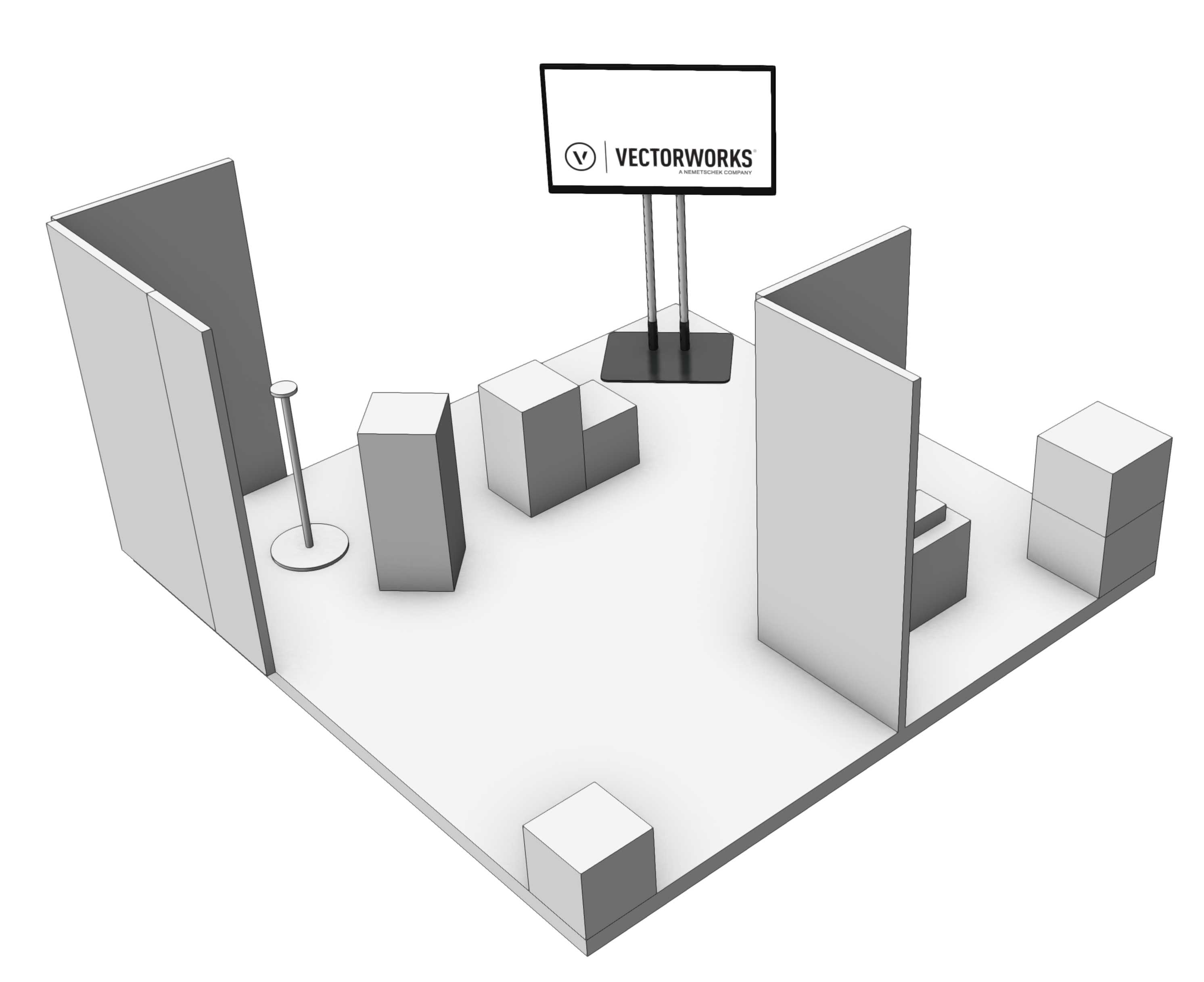
Vorgeschlagene Gestaltungselemente: viel Weiß + Graustufen / Schwarz + Akzentfarben.
Visuelle (und inhaltliche) Oberthemen: „Licht & Schatten“, Whiteboxing + Puzzlelabor.
Farben: FFDF00 · FF4A00 · 00C112 · 00ACFF · 253AE4
¶ Teams
| Project Title | Genre / short description | Team |
|---|---|---|
| Escape-Room-Hub | A modular escape room system that connects and controls all puzzles. | Malte Bungard, Paul Bleyer, Conrad Bader, Lucca Kuvecke |
| LightPlay | a digital game about manipulating light to find clues | Dennis Richter |
| Kopfkino | Findet den Code, indem ihr Symbole im Raum sucht. | Henry, Sude, Juri |
| Lichtorgel | Escape-Room-Game, bei dem eine farbcodierte Klaviatur verwendet wird, um Lichtelemente im Raum zu aktivieren und versteckte Symbole aufzudecken. Bei richtiger Notenabfolge zeigen die Lichter einen Code an, der den nächsten Schritt des Spiels freischaltet. | Cedric Grote, Anna Chen |
| Shadow Platformer (DIRK) | Help a little figure on the wall get from Point A to Point B: Cast shadows to the wall by flashing a torch on different objects. If you correctly place the shadows, it 'locks in' and the figure continues walking. | Marina Koops, Marek Dietz, Emil Lorenz, Caroline Römer |
| Stroboskopeffekt | The escaperoom puzzle takes advantage of the strobe effect to display the secret code to the player. | Omar Al-Dabbagh, Moritz Baron, Magnus Brix |
| Lights & Tunnels | 2D-Top-Down-Arcade-Spiel, in dem ein Roomba in einem unterirdischen Tunnelsystem gefangen ist.Um zu entkommen, erkundet er das Labyrinth, geleitet von farbigen Lichtern.Der Spieler muss die Logik verstehen, um das Rätsel zu lösen und den Ausgang zu finden. | Pascal, Sebastian, Ciyawasch |
| Color Cube | In diesem Rätsel leuchten 3 LEDs, die man zuerst irgendwie anbekommen muss. Anschließend muss man mithilfe von Schlüsselteilen im Raum das Blinken der LEDs in ein Schlüssel übersetzen. | Stefan Stevanovic |
| Ghost Hunt | Spielende bewegen sich mit einem „Geistersauger“ durch den Raum und „fangen“ mehrere Geister. | Bruno Bühler, Oliver Wolfertz, Nino Schneyer |

¶ Course options
„The Studio“ is a shared workshop format for these courses and their respective workloads and outcomes:
- Media Design 2 (Ralf Hebecker’s design elective in the bachelor programs Medieninfomatik and Medientechnologie). Here's the Moodle page for your enrollment there.
- Free Elective (Games Masters only)
Additionally, it can provide content and touch points for the free projects in Media Systems and Media Technology (Project B with 5 CP / 150 hrs per person or Project C with 10 CP / 300 hrs per person).
¶ Course times winter semester 2025/26
- Thursdays from 1:00 p.m. to 4:30 p.m.
- Starts Oct 9, 2025.
- Room E42 in building A (Finkenau 35)
¶ Hand-in
- Wiki documentation on a sub page, preferably with sketches, diagrams, videos / photos, simulations or animations of the concepts. Here's an info page about this kind of wiki documentations.
- Due date: Sunday, Feb 15, 2026 (end of day)
¶ Scope
In “The Studio”, small teams develop experimental playful applications in an agile way close to the reality of creative development studios.
The project includes, for example, interactive spaces, advanced or experimental video games, or games with original controllers.
The results can include (sophisticated) concepts, prototypes, and detailed designs.
We have limited budget for buildings and equipment, but we have a lot of equipment in the GamesLab to tinker with.
You should bring:
- Enjoyment of interdisciplinary, customer-oriented project work
- Ideally, an interest in entrepreneurial knowledge
- Helpful, but not required: Programming, design, or planning skills
- Occasionally we collaborate with colleagues from other disciplines.
- If it suits the participants, we are also happy to offer full-day sessions and/or sprints over several days.
¶ Three possible outcomes
- If it's a physical device or digital game: It can still be abstract and raw, but it must be fully functional.
- If it's a game concept: Complete gameplay, tested and optimized early on, playable mockups.
- If it's a live room overall concept: A sophisticated concept with mockups/pre-viz.
All projects must calculate their costs (beforehand and towards the end).
¶ Schedule
|
Week |
Sem. week |
Date | Topic |
|
41 |
1 |
09.10.25 | 1. Start – welcome! Teams & ideas |
|
42 |
2 |
16.10.25 | 2. More ideas and research |
|
43 |
3 |
23.10.25 | 3. Let’s put the plan together |
|
44 |
4 |
30.10.25 | 4. Presentations / Go or no go / Playful Learning with Escape Rooms |
|
45 |
5 |
06.11.25 | 5. Von der Idee zum Konzept zum Prototypen. 2. Hälfte: Project Refinement Session |
|
46 |
6 |
13.11.25 | 6. Kuti Case Study. 2. Hälfte: Project Refinement Session |
|
47 |
7 |
20.11.25 | 7. Spielend lernen. 2. Hälfte: Project Refinement Session |
|
48 |
8 |
27.11.25 | 8. (day before: test session Design 2) |
|
49 |
9 |
04.12.25 | 9. Tba |
|
50 |
10 |
11.12.25 | 10. Playable prototype & concepts. Do we want to setup on 12.12.? |
|
51 |
11 |
18.12.25 | 11. Tba |
|
52 |
— |
25.12.25 | Winter holidays |
|
1 |
— |
01.01.26 | Winter holidays |
|
2 |
12 |
08.01.26 | 12. Wiki documentation how to + help |
|
3 |
13 |
15.01.26 | 13. Aufbaubeginn & Testing |
|
4 |
14 |
22.01.26 | 14. Aufbau & Finalisierung |
|
5 |
15 |
29.01.26 | Final Demonstration |
|
6 |
16 |
05.02.26 | Exam week 1 – Wiki documentation |
|
7 |
17 |
12.02.26 | Exam week 2 – Wiki documentation |
¶ Briefing / Specs
¶ Target group(s)
- Für (Kinder-) Museum und deren Eltern (6-45 Jahre)
- Keine GamerInnen, keine Medienprofis
- Leicht verständlich
- Freundlich, spielerisch
¶ Contraints / Success criteria
- Lieber günstig statt teuer (eher „Play“ als „Experimenta“)
- Möglichst universell / vielfältig einsetzbar
- Scope eher klein (weil wir wenig Zeit haben und es gut gepolisht sein soll)
- Umsetzung eher einfach
- Aufgebaut 4 x 4 m Ausstellungsfläche maximal (für alle zusammen)
- Passt zusammengepackt in einen VW Caddy (1,75 x 1,2 x 1,2 m, oder 2 Europaletten mit 1,05 m Zeug drauf)
- Nicht mehr als 500 kg. Siehe auch unten DHL.
- Gesamt für 4-12 Leute pro Session, Einzelteile für 1-6
- Auf- und Abbau je unter 60 Minuten
- 250 V-Stromanschlüsse sind immerhin vorhanden
- Dauer-Internet ist meist gar nicht so unproblematisch... ist es nötig?
- Robust (das kommt meist erst später und Prototypen dürfen noch wackelig sein)
- Wenn Einzelteile: geben Teilergebnis an „Hub“ weiter
¶ Instant Wins
Das hier sind alles Sachen, die wirklich großartig wären. Vielleicht fällt Euch was Passendes ein.
- Kann Auto-Reset nach erfolgter Spielrunde
- Unbeaufsicht betreibbar (zum Beispiel moderiert überwiegend durch NPC)
- Stufenweises Hint-System
- Passt als Gesamtsystem in ein DHL-Paket (innen 57 x 57 x bis zu 117 cm, bis 31,5 kg, aber lieber bis 19,5 kg). Das verbilligt den Versand dramatisch und ermöglicht es zum Beispiel auch Schulen mit wenig Geld, das mal zu bestellen.
¶ Gute Motivatoren
- (Halbwegs) fresh?
- Eigener Twist?
- Besonders doll Bock drauf?
¶ Formate / Variationen
Dies ist fast eine Sammlung mit zwei Gegenpolen. Es geht von sehr digital / allein bis hin sehr real / viele Mitspielende:
- Digital EinspielerIn (zum Beispiel Crimson Room. Spielen Sie das ruhig mal, es ist sehr gut. Den Code finden Sie im Netz.)
- Digital MehrspielerInnen
- PDF-Download zum Selbstdrucken und Ausschneiden (zum Beispiel „Explorer's Lost Camp Escape Room“)
- Analoges „Kartonspiel“ (Karten, Brettspiele oder auch fertig kaufbare Exit-Games)
- „Kartonspiel“ mit kleinen Objekten (Brettspiele mit Figuren, kleinen Maschinen usw., z.B. „The Game of Life“)
- Objekt- / Apparatespiele (zum Beispiel „Jenga“ oder „Hungry Hungry Hippos“)
- Digitale Anwendungen im realen Raum
- Vernetzte digitale Anwendungen im realen Raum
- Eigene Apparate / Maschinen
- Licht, Ventilatoren usw.
- Kompletter Bühnenbau mit Installationen
¶ Gängige basale Spielprinzipien
Da gibt's schon auch noch detailliertere Listen und schlaue Bücher zu. Der Punkt ist: viele Spiele gehen auf sehr einfache Mechaniken und Ziele zurück.
- Finden (Dinge, Muster, Unterschiede)
- (Ein-)Sammeln (auch: komplettieren)
- (Ein-)Sortieren, Zuordnen (klassisches Puzzle)
- Bild / Wörterpuzzle
- Verstehen
- Anschalten / anmachen
- Treffen (zeitbasiert / Reaktionsgeschwindigkeit oder Präzision)
- Tanzen (eigentlich auch zeitbasiert)
- (Auf-) Bauen (füge Dinge zu etwas Größerem zusammen)
- Zerstören (z.B. Ballon zerplatzen mit etwas darin)
- Schnell sein / rennen
- Stärke (heben, hochziehen, Tauziehen)
- Passendes Objekt finden (oft Schlüssel)
- Codes finden / übersetzen
¶ Gute Spielziele
Auch hier gib's schon auch noch ein paar mehr Motive. Für AnfängerInnen reichen diese aber eigentlich meist gut aus.
- Rette die Welt (wende eine Katastrophe ab)
- Rette die Rotte (finde Schutz, Feuer, Futter, Unterhaltung)
- Finde den Schatz / Futter
- Finde den Ausweg / Ausgang
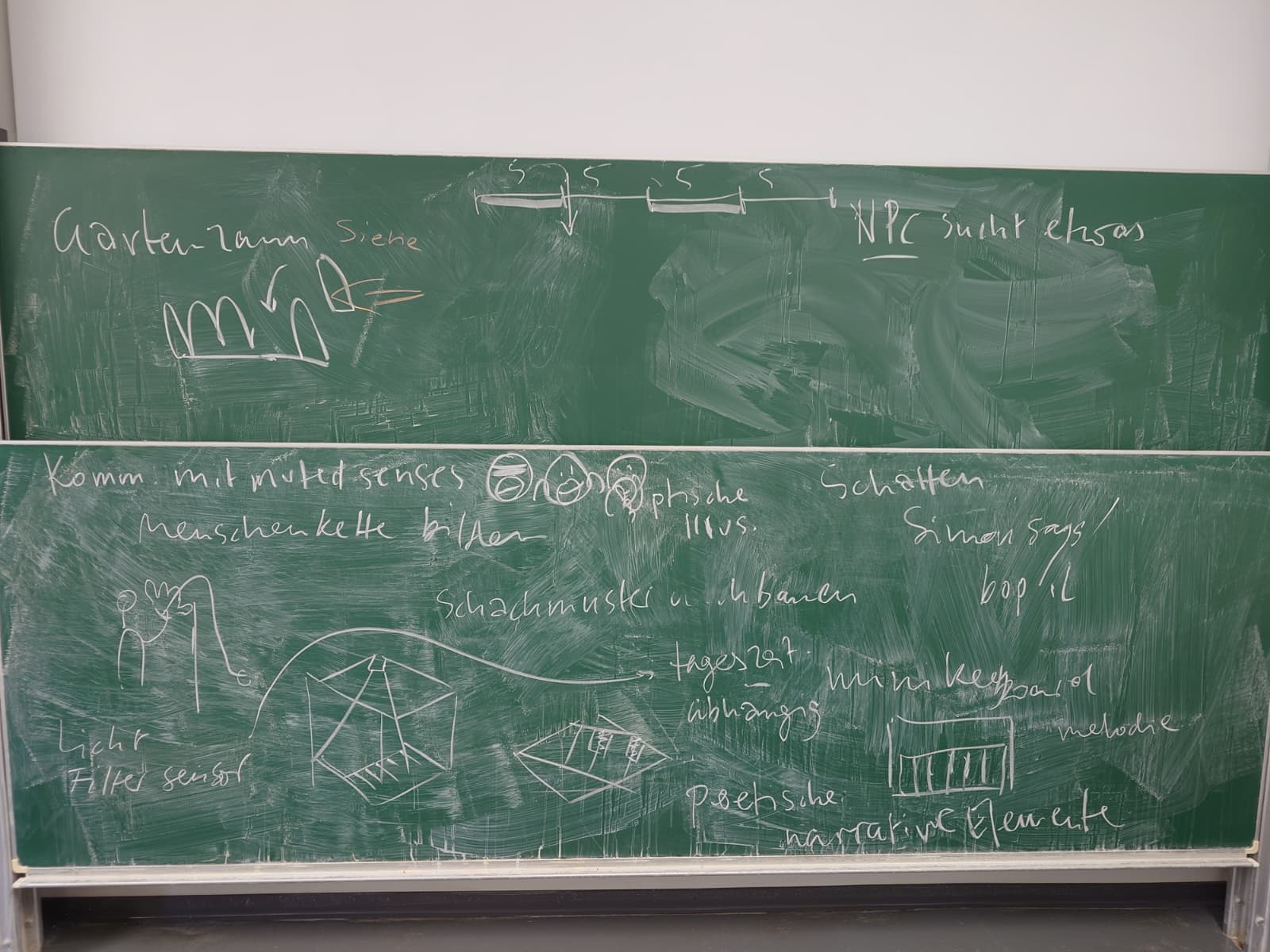
¶ Erste Ideen
¶ Archiv
¶ Summer semester ’25
¶ Hand-in
Hand-in: wiki documentation on a sub page, preferably with sketches, diagrams, photos, simulations or animations of the concepts. Here's an info page about this kind of wiki documentations.
New: Due date: August 31, 2025 (end of day)
¶ Teams
| Project Title | Genre / short description | Team |
|---|---|---|
| Radio Puzzle | Live Escape Puzzle with electronic apparatus and audio clues | Malte Bungard, Conrad Bader, Lucca Kuvecke |
| Curtain Puzzle | Live Escape Puzzle | Konrad S., Nick H., Sören G. |
| Flux It Out! | Analog Live Escape Magnet Puzzle | S. Zidoun (xxxx351), S. Bosnak (xxx8240), A. Breitner (xxx6275) |
| Memory Breakout | Multiplayer Live Escape Puzzle with mobile devices | Julie Vohnsen, Cedric Bleck, Lars Stiegmann, Arda Koray Dogan |
| Mirror Puzzle | Kuti Live Escape Puzzle | Oskar K., T. Loan. P., Lionel K. |
| Synchronized Effort | Three player Live Escape Puzzle with LED column, foot sensors and air pressure controller | Dennis, Vincent… |
| Puzzle Pockets | Analog Live Escape Puzzle | Bianca Melissa Rühr Levy |
| AR Symbol Grid Puzzle | AR Live Escape Puzzle | Miriam Jüngling |
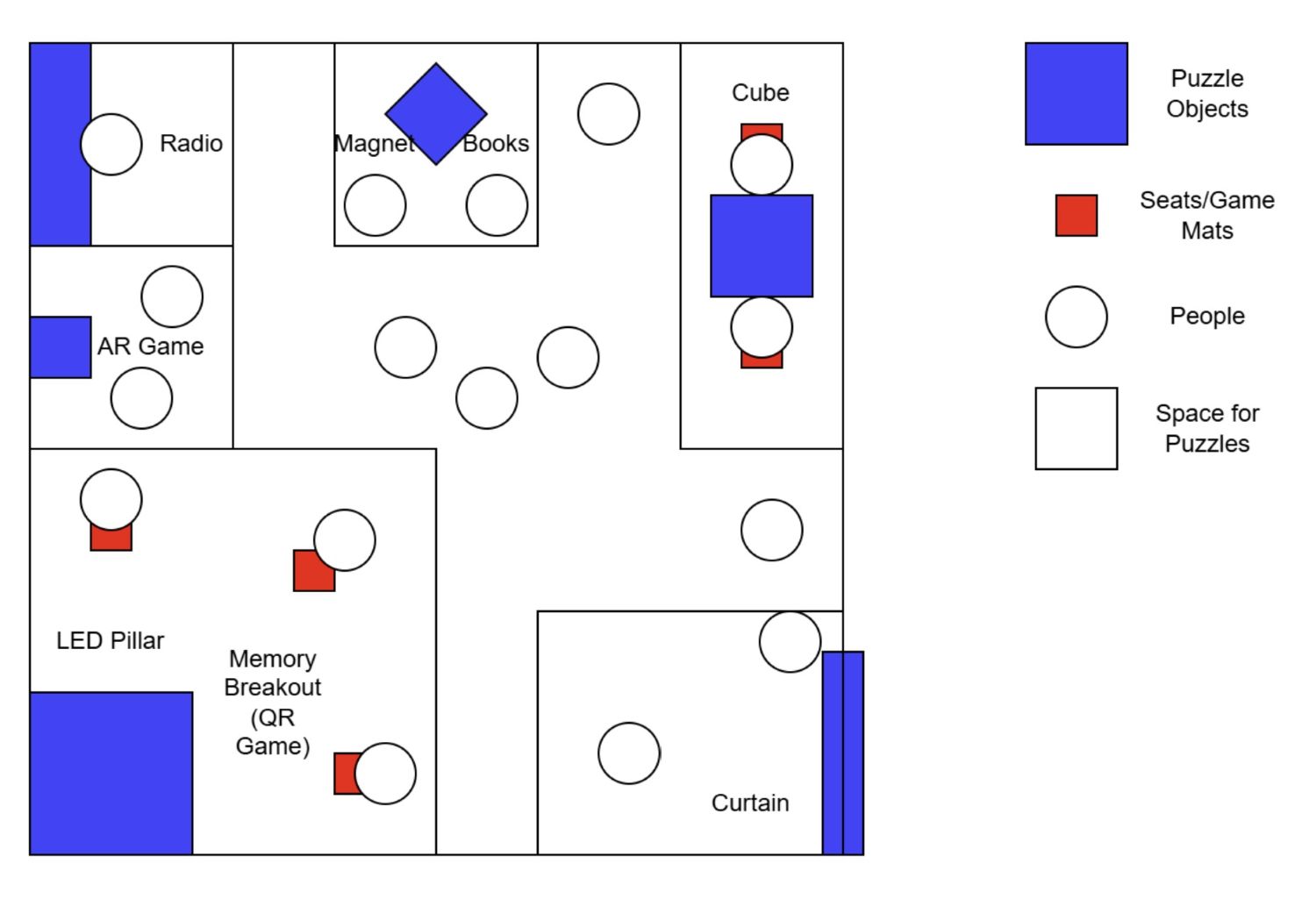
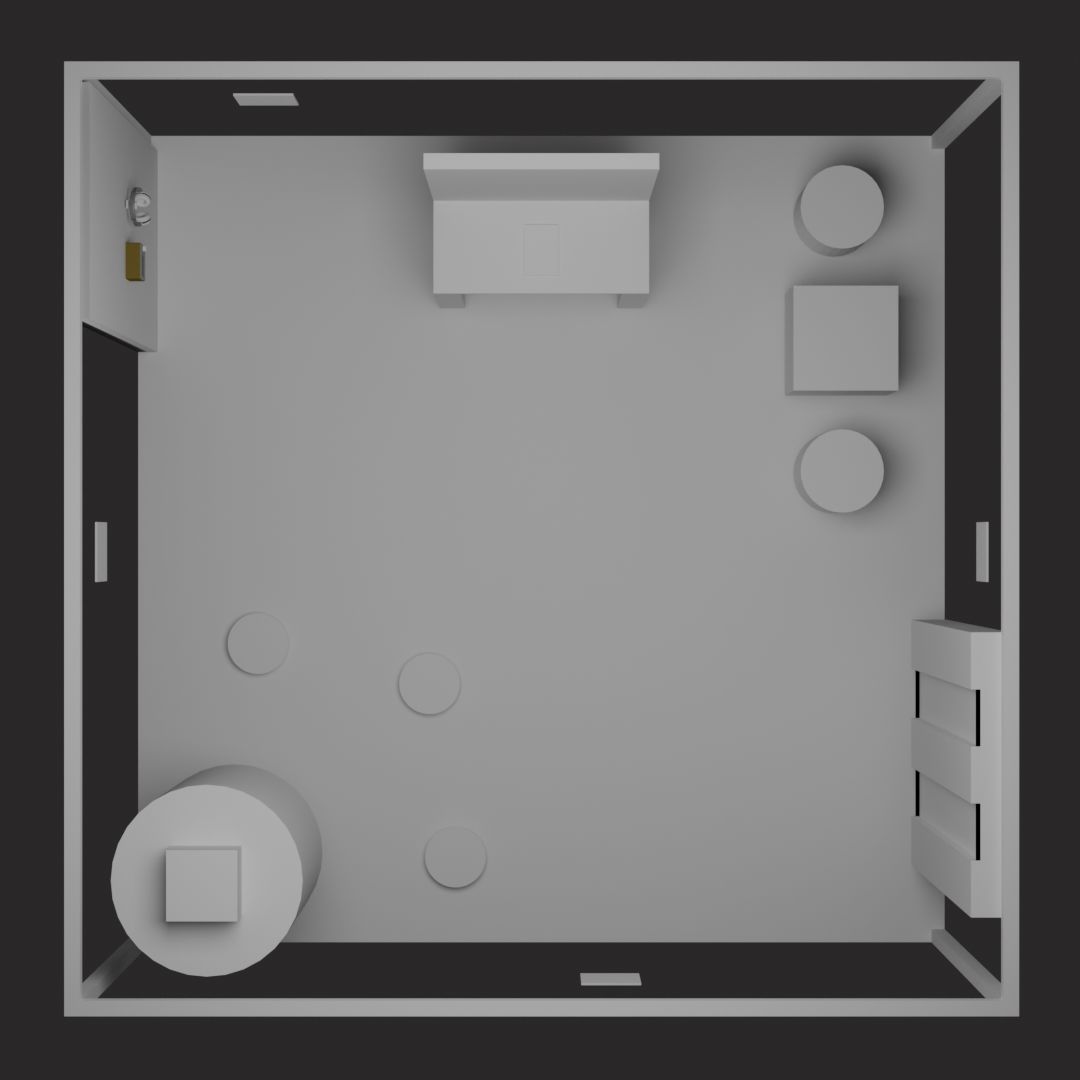
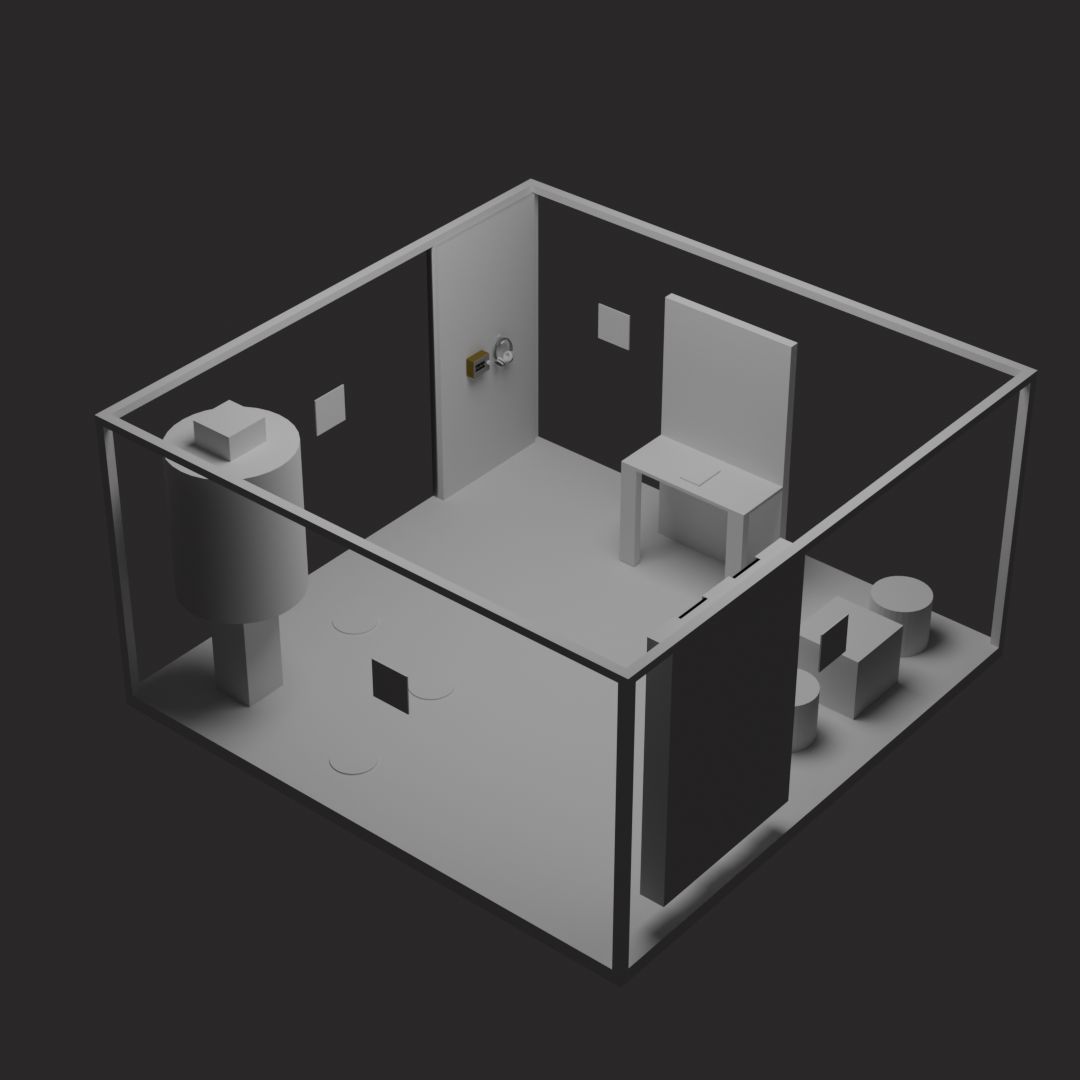
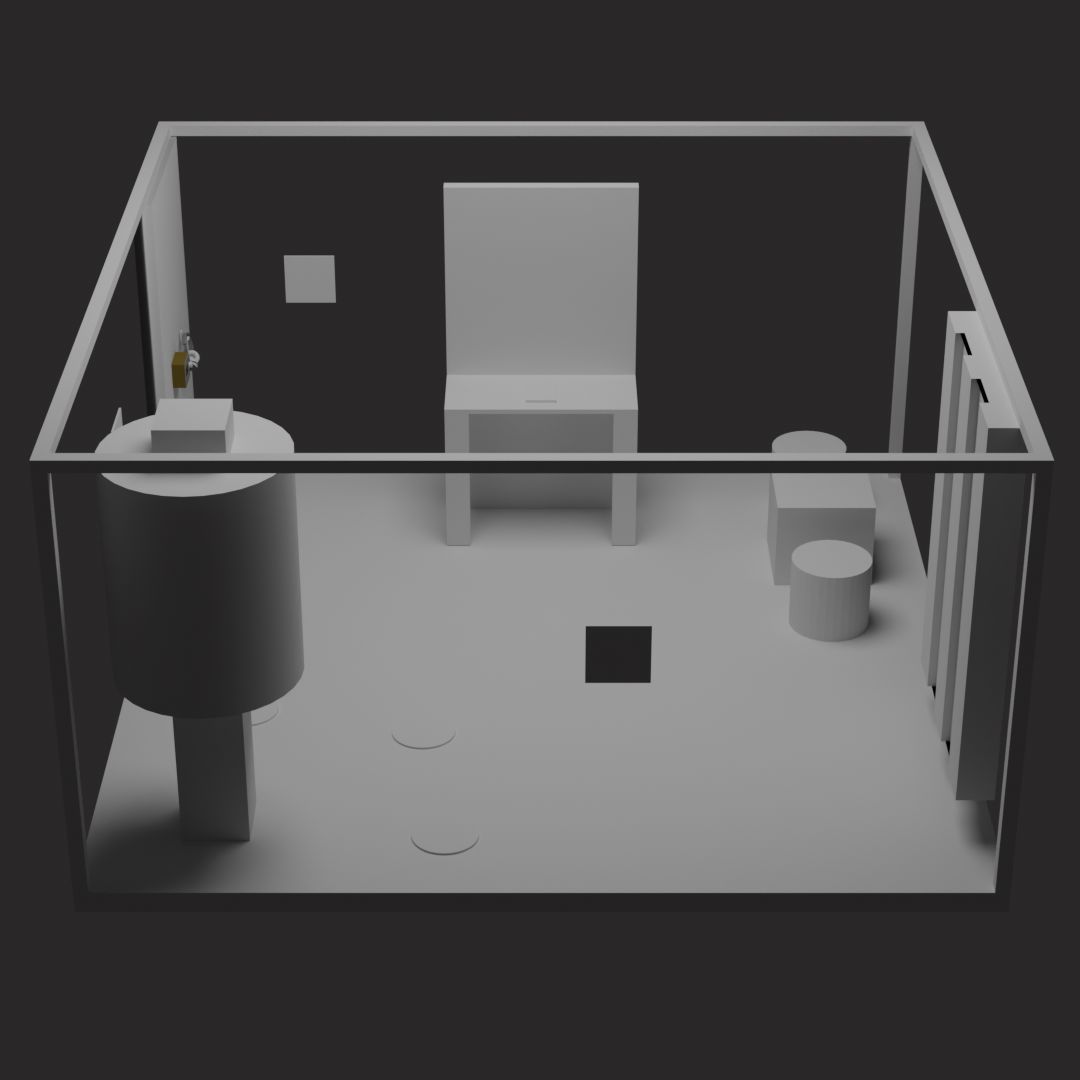
¶ Room / Floor Plan
¶ Files
These are the 3D files of the room. Feel free to modify and move your puzzles. Please update the images if you make any changes.
¶ These parts are completed or outdated and only kept for reference.
¶ Start: Tasks for all teams
First, we need a...
- Brief description of your project.
1-2 pages are usually sufficient. Sketches/graphics/examples can save a lot of text or at least accompany/support it. References to existing content are also welcome, for example: "A game like Journey, but underwater and in VR and only 5 minutes long." Or something like that ;)
Your project implementations should always be embedded in solid research. Solid research doesn't mean spending half an hour on YouTube (although that's not generally a bad thing and can be part of the research), but rather actually spending 1-2 days on the topic, going through the basics, throwing AIs at it, reading (research) articles on the subject (for example this one), and compiling your own drafts, descriptions, and examples, commented on, illustrated, and comprehensible.
These points can help – both you and, subsequently, your audience. Essentials are highlighted.
- Surrounding/competitive analysis: what's already available? What not?
- What are your target audience(s)? Can/do you want to name Personas?
- Your unique selling point (USP, if any)? What is your particular niche?
- What should be produced in-house/manually, and what can be added/purchased/automated?
- Libraries/frameworks/plug-ins – which ones as planned?
- Where should assets come from? Curate or produce? Do you know relevant asset sources? Have you researched relevant asset stores? If not, please do so. Do you know what can be generated by AI?
- Please describe your operating paradigm (output platform(s), OS, (special) controllers, local native or browser?)
- Output formats/paths?
You are welcome to start experimentally/open-ended in parallel and see what happens. Sooner or later, however, you should address at least some of these points to either verify or further develop your approach.
A lot of things already exist, and you don't have to invent or build them again. It's very worthwhile to find these things and then build on this prior knowledge.